A policy of cultural balance could strengthen Greece’s role in the Western Balkans without requiring any change in Athens’ position on recognition
For more than a decade, Greek policy towards Kosovo has occupied an unusual but potentially useful diplomatic space. Athens does not recognise Kosovo’s independence, making Greece one of the five European Union member states that maintain this position. At the same time, it has not pursued a policy of isolation. Greece maintains a Liaison Office and consular presence in Pristina, participates in both EULEX and NATO’s KFOR mission, supports the EU-facilitated dialogue between Belgrade and Pristina, has backed practical measures such as visa liberalisation and maintains economic and cultural contacts with Kosovo (Hellenic Ministry of Foreign Affairs, 2026).
This balance has allowed Greece to preserve its established position on status while remaining engaged with the political reality on the ground. The question is whether engagement alone is still sufficient. Greece’s strategic problem in Kosovo is not primarily one of diplomatic presence. Greece is already present. The more important question is whether that presence generates durable influence: whether Athens possesses networks, institutional relationships, cultural visibility and social access capable of giving it a distinct role in a part of the Western Balkans where other regional and international actors have invested systematically for years. The distinction matters.
A country can maintain an office, attend diplomatic meetings and participate in multinational missions without significantly shaping the environment around it. Influence requires something deeper. It is produced through accumulated relationships with institutions, universities, religious communities, businesses, municipalities, cultural organisations and individuals who continue to interact long after a particular diplomatic meeting has ended. For Greece, Kosovo therefore presents an opportunity to move from a policy of presence to a policy of influence. And it can do so without changing its position on recognition.
Status and influence are not the same question
The debate surrounding Greek policy towards Kosovo is often reduced to a binary question: will Greece eventually recognise Kosovo, or will it continue to withhold recognition?
That is an important foreign-policy issue, but it is not the only issue. Recognition concerns legal and diplomatic status. Influence concerns political access, relationships, reputation and the ability to shape outcomes. The two do not have to move together. Athens already demonstrates this distinction in practice. The Greek Ministry of Foreign Affairs explicitly states both that Greece has not recognised Kosovo’s independence and that it follows a “constructive political approach” intended to strengthen peace, stability, development, minority rights and religious and cultural heritage. Greece also participates institutionally in EULEX and KFOR while maintaining direct relations through its Liaison Office in Pristina (Hellenic Ministry of Foreign Affairs, 2026).
This creates an unusual diplomatic asset. Because Greece is neither a recogniser seeking to establish Kosovo’s statehood nor a state pursuing complete political disengagement, it possesses some capacity to communicate across lines that are increasingly difficult for other actors to cross. That capacity is particularly valuable at a time when the broader normalisation process remains incomplete. The European Commission’s 2026 Kosovo Report concluded that, despite some progress, neither Belgrade nor Pristina had made sufficient progress in implementing important elements of their dialogue obligations and that the relationship remained one of the principal challenges to regional stability (European Commission, 2026). Greek strategy should therefore not wait for the status question to be resolved before deciding what its wider role in Kosovo should be. It should build that role now.
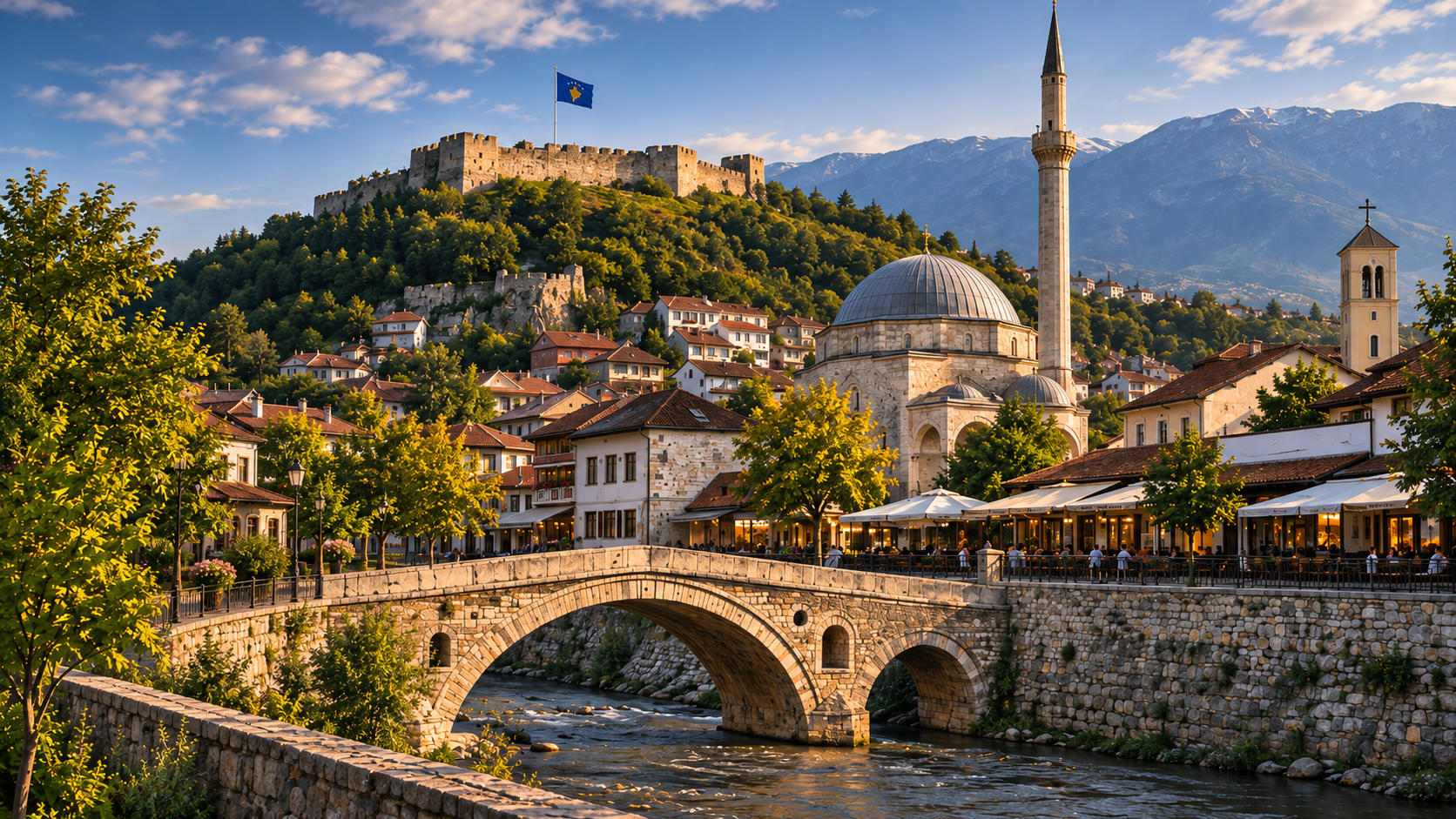
Figure 1: Prizren a City of Overlapping Civilisations

Caption: Prizren’s historic centre, with the Stone Bridge, Sinan Pasha Mosque and the fortress above the city. The concentration of Ottoman, Orthodox, Catholic and other cultural traditions within a relatively small urban space makes Prizren a particularly suitable setting for a strategy based on cultural balance rather than cultural competition.
Prizren as a laboratory of cultural diplomacy
Prizren could become the symbolic centre of such a policy. If Pristina represents the political and administrative centre of Kosovo, Prizren reveals its historical complexity more clearly. Within the same urban environment stand Islamic, Orthodox and Catholic monuments, Ottoman architecture and layers of Albanian, Turkish and wider Balkan historical memory. A renovated Jewish Cultural Centre has also reopened in the city, another reminder that the history of Prizren cannot be reduced to a single religious or national narrative (European Commission, 2026). This density of competing and overlapping identities is often treated as a vulnerability. It can also be treated as strategic capital.
The basic principle should be that the protection of one community’s heritage does not diminish another’s. Restoring a mosque does not threaten an Orthodox church. Protecting an Orthodox monastery does not undermine Islamic heritage. A Catholic cathedral does not need to be interpreted as evidence against either. The real danger appears when the historical identity of a place becomes monopolised by one narrative and the others slowly become architectural remnants without functioning communities, institutions or cultural relevance. Greece could position itself precisely against this logic. Rather than entering Kosovo as another actor competing for ownership of historical memory, Athens could promote a model in which the preservation of Orthodox heritage is embedded within a broader commitment to Balkan cultural pluralism.
One possible initiative would be the establishment in Prizren of a Centre for Orthodox and Balkan Cultural Heritage, created only through agreement with the Orthodox Church, local authorities and relevant European or international institutions. The Cathedral of Saint George could serve as one point of reference for such an initiative, but it should never be presented as a Greek institution or as the transfer of Orthodox heritage into a Greek sphere. That would be historically, ecclesiologically and politically counterproductive. The Greek role should instead be technical and connective: conservation expertise, digitisation of archives, training of restorers, Byzantine and Balkan studies, academic seminars, exhibitions, linguistic programmes and structured interfaith dialogue. In other words, Greece should contribute capabilities rather than claim ownership.
Figure 2: Saint George of Prizren: Heritage Without Appropriation

Caption: The Orthodox Cathedral of Saint George in Prizren. A Greek cultural initiative centred on conservation, research and education would need to operate in partnership with the Orthodox Church rather than seek to redefine the identity of the monument.
Such an approach would also fit Greece’s own institutional strengths. Greek universities, archaeological services, Byzantine research centres, theological faculties, conservation specialists and Balkan studies programmes constitute an existing pool of expertise. Greece does not need to manufacture a new identity in order to develop soft power in Kosovo. It already possesses intellectual and cultural assets whose regional application has simply remained underdeveloped. The strategic advantage would lie in presenting Orthodoxy not as an instrument of confrontation but as part of a broader European commitment to historical continuity and religious pluralism. That distinction is crucial.
Türkiye already understands the strategic value of heritage
The case for a more systematic Greek approach becomes clearer when Türkiye’s activity in Kosovo is considered. For Ankara, cultural heritage has long been more than an archaeological matter. Institutions such as the Turkish Cooperation and Coordination Agency, TİKA, have used restoration, development assistance, educational cooperation and cultural programmes to maintain relationships throughout the former Ottoman space.
In Kosovo, TİKA began restoration work on the Sinan Pasha Mosque in Prizren in 2007, completing the project in 2011. It has also been involved in the restoration of the Fatih Mosque and other Ottoman-era heritage projects (TİKA, 2022). These initiatives should not be understood only as the preservation of old buildings. They create institutional memory. Turkish engineers, officials, cultural administrators, local religious organisations and municipal authorities work together. Contacts accumulate. Turkey becomes associated not simply with historical Ottoman presence but with contemporary investment in that heritage. This is soft power in one of its most durable forms. It embeds foreign-policy presence within local institutions rather than relying solely on diplomatic messaging.
Figure 3: Sinan Pasha Mosque: Heritage as Foreign Policy

Caption: The Sinan Pasha Mosque in Prizren. TİKA began its restoration in 2007 and completed the work in 2011, illustrating how heritage conservation can simultaneously function as cultural diplomacy and long-term relationship building.
The wrong Greek response would be to imitate this through religious competition. Athens has no strategic interest in developing a “church for mosque” policy in Kosovo, nor in presenting Turkish cultural activity as inherently hostile. Such an approach would transform cultural diplomacy into a confessional contest and would almost certainly reduce Greece’s credibility among Kosovo’s Muslim-majority society. The more intelligent response is differentiation.
Türkiye can legitimately invest in the Ottoman-Islamic dimension of Balkan history. Greece can develop a different model based on Byzantine and Orthodox expertise, European cultural preservation, academic networks and the idea that multiple historical traditions can coexist without requiring one to eliminate the others. The objective is not to defeat Turkish soft power. It is to ensure that Turkey is not one of the only regional states consistently investing in the cultural field.
Monuments without communities are not enough
This leads to a more difficult problem. The survival of Orthodox heritage in Kosovo cannot be measured only by the physical condition of churches and monasteries. UNESCO’s Medieval Monuments in Kosovo comprise the Dečani Monastery, the Patriarchate of Peć, Gračanica Monastery and the Church of the Virgin of Ljeviša in Prizren. UNESCO describes them as outstanding examples of the interaction between Byzantine, Romanesque and Balkan ecclesiastical traditions. The group has remained on the List of World Heritage in Danger, reflecting the continued sensitivity surrounding its protection and management (UNESCO, 2006–2026).
Kosovo also possesses an extensive legal framework of Special Protective Zones around Orthodox and other heritage sites. The OSCE has repeatedly stressed, however, that cultural heritage protection is inseparable from security, infrastructure, spatial planning, access and relations between communities (OSCE, 2022). The European Commission’s 2026 assessment similarly found that relations between Kosovo institutions and the Orthodox Church remained difficult, citing inconsistent interpretations of legal protection mechanisms and infringements affecting Special Protective Zones. At the same time, the Commission also recorded examples of successful cooperation, unhindered religious visits and interfaith initiatives (European Commission, 2026).
Figure 4: The Virgin of Ljeviša: Preserving More Than Stone

Caption: The Church of the Virgin of Ljeviša in Prizren, part of the UNESCO-listed Medieval Monuments in Kosovo. Protecting religious heritage requires more than architectural conservation: continuity also depends upon access, security, worship and the existence of communities able to maintain a living relationship with the site.
A church can be restored and still become socially empty. A monastery can be placed under legal protection and still gradually become detached from the community that gives it religious meaning. This is why heritage policy must extend beyond stones. It concerns schools, property rights, housing, employment, freedom of movement, access to religious sites, language and the ability of minority communities to participate in local life.
The OSCE has made a similar conceptual shift in its work, presenting cultural heritage not simply as a conservation problem but as part of post-conflict reconciliation and peacebuilding. Both Islamic and Christian monuments were targeted during different phases of conflict and inter-ethnic violence, demonstrating how architecture can become a surrogate battlefield for political identity (OSCE, 2024). Greece could make this human dimension one of its principal contributions at European level. Instead of discussing Orthodox heritage only when a monastery becomes the subject of a diplomatic dispute, Athens could advocate systematically for the conditions required for religious and cultural traditions to remain living communities.
Radicalisation requires precision, not civilisational language
There is also a security dimension that cannot simply be ignored. Kosovo experienced a significant problem with jihadist mobilisation during the Syrian and Iraqi conflicts. Research based on government data estimated that 355 individuals from Kosovo travelled to Syria and Iraq between 2012 and 2015, including 256 adult men, making the country one of the most significant European sources of foreign fighters relative to population size at the height of the phenomenon (Bytyqi and Mullins, 2019). This history remains relevant, but it must be handled with precision.
Islamic religiosity is not the same as Salafism. Salafism is not automatically violent extremism. Conservative religious belief is not terrorism. And Kosovo’s Muslim population cannot reasonably be treated through the analytical framework developed for a small number of radical networks. Blurring these categories would be both intellectually inaccurate and strategically damaging.
Indeed, the European Commission’s 2026 assessment offers a more useful contemporary framework. It judged Kosovo’s terrorism threat level to be moderate, noted that religiously motivated extremism had not disappeared, and reported that authorities had administratively closed 27 informal mosques associated with conservative or radical preaching while continuing rehabilitation and reintegration programmes. At the same time, the Commission identified increased concern over ethno-nationalism and inter-ethnic disinformation (European Commission, 2026). The lesson is important.
Kosovo’s security challenges cannot be reduced to Islamism. Religious extremism, ethno-nationalism, foreign information manipulation, unresolved inter-communal tensions and political polarisation can all contribute to instability. For Greece, this means that religious freedom and counter-extremism should be treated as complementary rather than contradictory policies. Athens can support legitimate counter-radicalisation efforts while simultaneously defending Muslim religious freedom. It can protect Orthodox communities without defining Muslim communities as a security threat. And it can encourage interfaith engagement while recognising that actual extremist networks require security responses rather than vague appeals to dialogue. Such differentiation would strengthen rather than weaken Greek credibility.
The Liaison Office should become an influence platform
The most immediately achievable component of this strategy requires neither recognition nor the creation of a new diplomatic mission. Greece already has the institutional platform it needs. Its Liaison Office in Pristina maintains diplomatic and consular functions and operates within a broader Greek policy that already includes political, economic, cultural and security engagement. The objective should therefore be functional upgrading rather than symbolic renaming.
A diplomat or specialised official could be assigned a permanent portfolio covering cultural heritage and religious freedom. Another part of the mission’s work could focus more systematically on universities, civil society, municipalities and youth networks. Economic diplomacy could be integrated more closely with cultural and educational activity rather than operating as an entirely separate field. Greek personnel should also spend more time outside Pristina. A foreign policy based overwhelmingly on meetings in a capital inevitably develops a capital-city view of the country.
Prizren, Gračanica, Dečani, Peć and communities in the north present entirely different social and political environments. Regular field engagement would improve not only Greece’s visibility but also its understanding of local conditions. In strategic terms, this is a form of cultural intelligence.
It means understanding which institutions command trust, which historical memories remain politically active, which religious leaders possess genuine social influence, which local grievances are real and which narratives are being amplified for political purposes. Such knowledge cannot be produced entirely through diplomatic reporting from Pristina. It requires relationships.
Greece already has a small precedent for this approach. In 2022, the Greek Liaison Office cooperated with Kosovo’s education authorities and the National Library in Pristina in presenting the Albanian translation of Nikos Chrysos’ novel New Day, describing the event as part of developing Greek-Kosovar cultural and educational relations (Liaison Office of Greece in Pristina, 2022). Such events are modest. But soft power is usually built through accumulation rather than spectacle.
Education is the strongest long-term instrument
The most consequential element of a Greek influence strategy would probably not be a church, a diplomatic initiative or a cultural festival. It would be education. Scholarships remain one of the oldest and most effective instruments of long-term public diplomacy because they generate relationships that survive political cycles. A student who spends several years in Thessaloniki, Athens, Ioannina, Komotini or another Greek university does not simply acquire a degree. He or she learns the country, the language, its institutions and professional culture. Friendships and professional relationships form. Future officials, academics, architects, entrepreneurs, diplomats and researchers acquire direct experience of Greece rather than an abstract image of it. That is influence in its most durable form.
Figure 5: The Long Game: Education and Human Networks

Caption: The main campus of the University of Pristina. A structured Greek scholarship and academic-exchange programme would create professional and personal networks whose strategic value could endure for decades.
Greece could establish a dedicated scholarship programme for students and young professionals from Kosovo in archaeology, architecture, conservation, Balkan studies, international relations, history, theology, digital archiving, public administration and cultural management. The programme should not be restricted to a single ethnic or religious group. That would defeat its strategic purpose. Serb, Albanian, Bosniak, Turkish, Roma, Gorani and other applicants should be able to participate on equal academic terms. Particular value could be placed on programmes involving bilingualism, heritage management and regional cooperation.
Greek universities could also establish joint workshops in Prizren and Pristina, summer schools on Balkan history and heritage, placements for conservation students and exchanges between municipal heritage authorities. The objective would not be ideological conversion. It would be familiarity.
Joseph Nye’s concept of soft power is frequently reduced to culture in the superficial sense of films, tourism or national branding. Its deeper strategic importance lies in the ability of relationships, institutions and perceived legitimacy to make cooperation with a country appear natural rather than imposed (Nye, 2004). That is precisely the field in which Greece has underinvested in much of the Western Balkans.
Towards a Greek policy of cultural balance
These individual initiatives could be brought together under a coherent doctrine: a Policy of Cultural Balance in the Western Balkans. Its underlying principle would be straightforward. No community should have to erase another community’s history in order to secure recognition of its own.
For Greece, this would mean actively defending Orthodox cultural and religious rights while also supporting the preservation of Ottoman, Islamic, Catholic, Jewish and archaeological heritage. The apparent contradiction disappears once the objective is understood correctly. A state that defends only the monuments associated with its own civilisational identity appears partisan.
A state that establishes a credible principle and then applies it consistently gains the political legitimacy necessary to defend the cases about which it cares most deeply. This is the strategic advantage of cultural balance. It would allow Athens to speak about the Orthodox Church without sounding like an extension of Serbian national policy. It would allow Greece to discuss religious extremism without presenting Islam as an adversary. It would allow cooperation with Pristina without requiring recognition. And it would allow cooperation with Belgrade without reducing Greek policy towards Kosovo to the preferences of Serbia.
Most importantly, it would give Greece an identifiable role. Small and medium-sized states rarely acquire influence by attempting to reproduce the instruments of larger powers. Greece cannot and need not compete with the financial resources of major European states, with American security influence or with Turkey’s extensive institutional footprint. It needs a niche in which its own assets generate disproportionate value. Balkan historical knowledge, Orthodox and Byzantine cultural expertise, EU membership, relationships with Serbia, channels to Pristina, proximity, universities, conservation expertise and experience managing a religiously and historically layered cultural landscape provide precisely such a niche.
References
Bytyqi, Kujtim, and Sam Mullins. “Returnee Foreign Fighters from Syria and Iraq: The Kosovan Experience.” CTC Sentinel, Vol. 12, No. 7, Combating Terrorism Center at West Point, 2019.
European Commission. Kosovo Report 2026. Directorate-General for Enlargement and Eastern Neighbourhood, Brussels, 4 November 2026.
European External Action Service. Belgrade–Pristina Dialogue. European Union, 2026.
Hellenic Ministry of Foreign Affairs. Kosovo: Bilateral Relations. Athens, 2026.
Hellenic Ministry of Foreign Affairs. Economic Relations with Kosovo. Athens, 2026.
Liaison Office of Greece in Pristina. “‘New Day’ by Nikos Chrysos at the National Library in Pristina and a New Day in Greek-Kosovar Cultural and Educational Relations.” Hellenic Ministry of Foreign Affairs, 2 March 2022.
Nye, Joseph S. Soft Power: The Means to Success in World Politics. New York: PublicAffairs, 2004.
Organization for Security and Co-operation in Europe. Protection of Cultural Heritage in Kosovo. OSCE Mission in Kosovo, 18 July 2022.
Organization for Security and Co-operation in Europe. “Building Blocks for Peace: Cultural Heritage Protection in Kosovo.” Security Community, 15 November 2024.
TİKA – Turkish Cooperation and Coordination Agency. “TİKA Works to Preserve Common Cultural Heritage in Balkans.” 2022.
UNESCO World Heritage Centre. Medieval Monuments in Kosovo. World Heritage List, No. 724.
UNESCO World Heritage Committee. Decision 30 COM 8B.54, Inscription of the Medieval Monuments in Kosovo on the List of World Heritage in Danger, 2006; subsequent state-of-conservation decisions through 2026.